.webp)
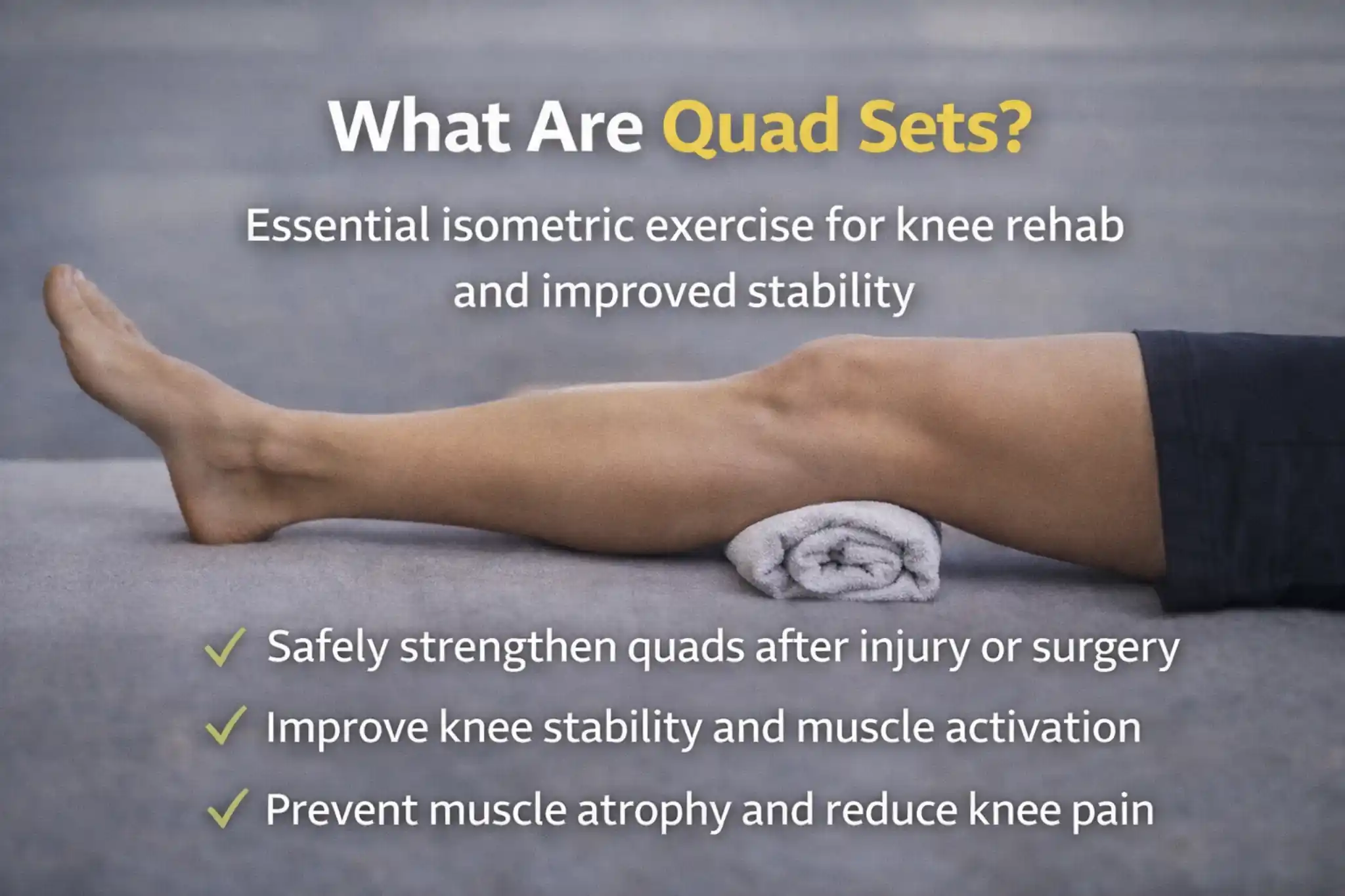
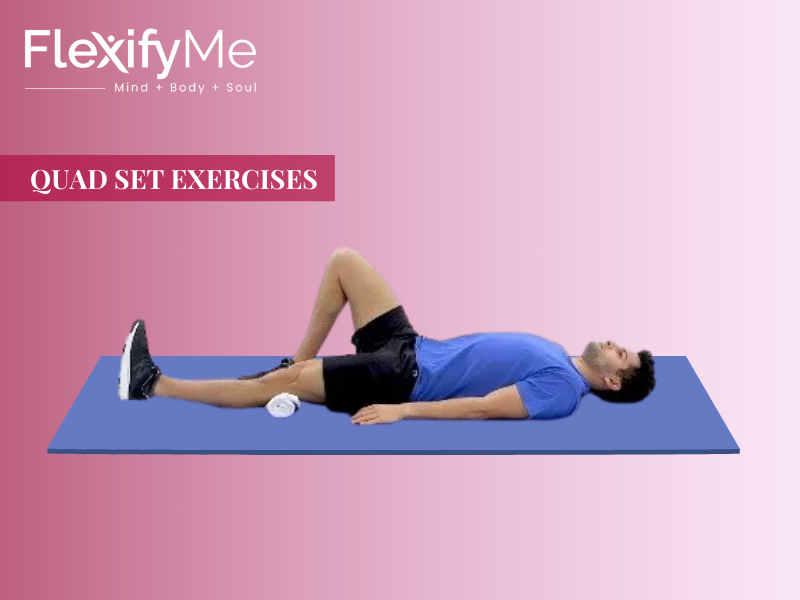
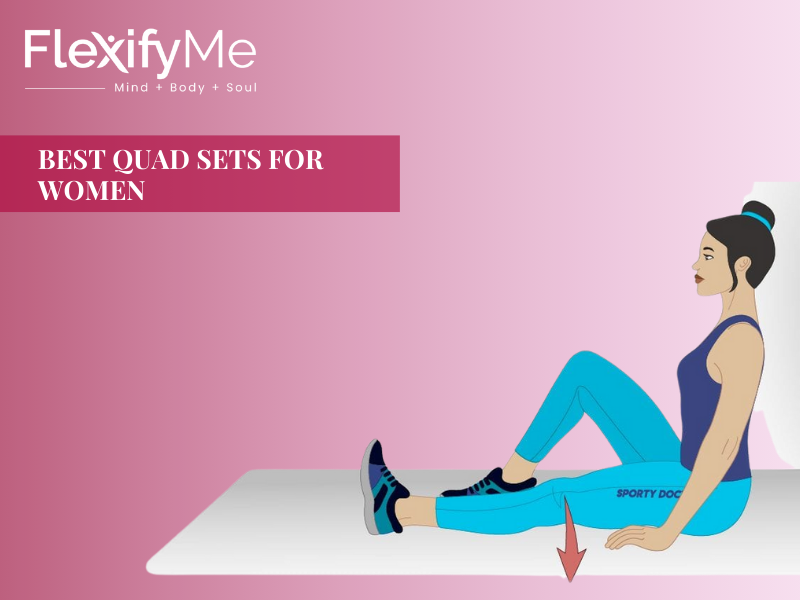
A quad set is a simple isometric exercise where you intentionally tighten (contract) the quadriceps muscles on the front of your thigh without actually moving your leg or knee joint. It’s a foundational move designed to re-establish control and build strength in the quad, especially when the knee is sensitive.
- Post-Injury Rehabilitation: It’s a go-to exercise after knee surgery or injury because it safely rebuilds strength and awakens the muscle without bending or stressing the joint.
- Improved Muscle Activation: The exercise is crucial for re-establishing the mind-muscle connection, essentially retraining your brain to properly fire the quad muscles on command for better stability.
- Atrophy Prevention: Performing regular quad sets helps prevent muscle atrophy, which is the wasting away of muscle tissue during periods of immobilization or extended inactivity.
- Knee Pain Reduction: By strengthening the VMO (a key part of your quad), this move helps stabilize the kneecap, which can directly reduce common anterior knee pain.
Who should use this: Anyone recovering from knee surgery or injury, individuals with patellofemoral pain, or athletes looking for a simple activation drill before a workout or run.
Introduction
Ever feel that little twinge in your knee and think, "Uh oh, there goes my workout plan"? 😟 You’re not alone. Knee pain can feel like a major roadblock, stopping your fitness goals right in their tracks. It’s frustrating, and it often leaves you wondering what you can possibly do to get stronger without making things worse. The reality is, millions of adults report experiencing knee pain.It's one of the most common complaints doctors hear. oh, there goes workout
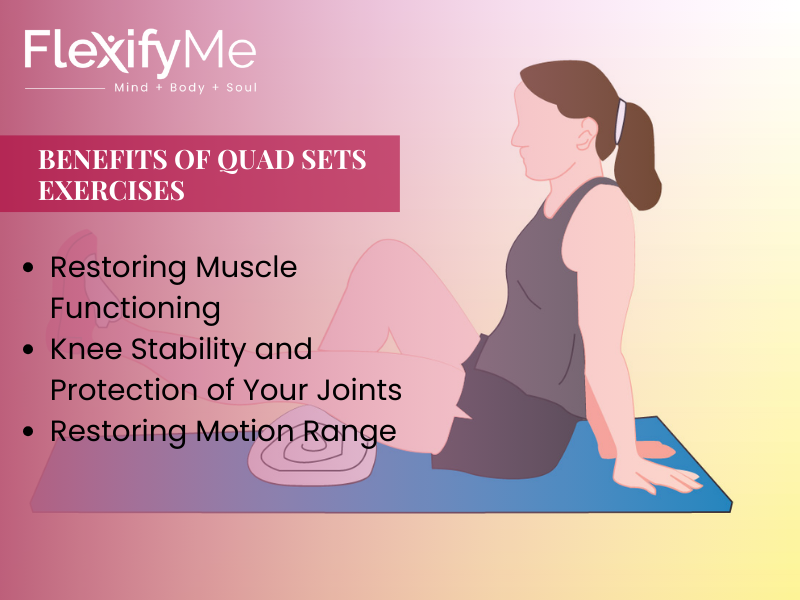
But what if I told you one of the most powerful moves for protecting your knees is one you can do sitting on the floor? No weights. No gym. It sounds too simple to be true, right? Well, it’s not. Enter the quad set, the unsung hero of knee health and a staple in **physical therapy** clinics everywhere. So, **what are quad sets**? They are a **foundational strength exercise** designed to wake up and strengthen your thigh muscles without bending or stressing your knee.
Why This Simple Move is a Game-Changer
Let's talk biology for a second, but don't worry, there won't be a quiz. Your thigh is home to a big, powerful muscle group called the **Quadriceps femoris muscle**. Think of it as the primary shock absorber and stabilizer for your **knee joint**. When this muscle is weak or isn't firing correctly, your knee takes on extra stress. This is where things can go wrong. A quad set is your secret weapon to fix this.
The magic is in how it works. This exercise uses an **isometric contraction**. That’s just a technical way of saying you tense the muscle without actually moving the joint. This is a huge deal, especially if you're **recovering from knee injury** or surgery. You can safely **activate your quad muscles** and build strength without causing pain or further damage. It’s the first step in re-establishing a strong **mind-muscle connection**—teaching your brain and muscles to talk to each other again. It’s about control. Pure and simple.

More Than Just an Exercise
Look, building a strong, resilient body isn’t about jumping into crazy, intense workouts from day one. That’s a recipe for burnout or injury. True, lasting fitness is built on a solid foundation. It’s a philosophy we live by here at **Original Body**. Our Certified Fitness Trainer, **Christian**, always emphasizes that mastering the basics is the key to unlocking your body's potential. You have to learn to walk before you can run, right? 🏃♀️
This exact principle is the core of our **Original Body Footprint** program. We don't just throw exercises at you; we help you understand your body and build strength from the ground up. Small, controlled movements like quad sets are the building blocks for a **sustainable fitness journey**. They prepare your body for bigger challenges and are an essential part of our **Natural Body Transformation** service. It's not about a magic pill; it's about smart, consistent effort. You can even track your progress and stay engaged using our **Mobile Applications**. So, are you ready to see how this one simple move can change everything? Let's dive in.
Key Benefits
So, what’s the big deal with an exercise that's basically just... flexing your thigh? It seems way too simple to be effective, right? The reality is, the benefits of quad sets are massive, especially when it comes to the health and strength of your knees. This isn't just a pointless flex; it's a foundational move that can make a world of difference, whether you're recovering from an injury or just trying to build more resilient legs for life. Let’s break down why this simple exercise is such a powerhouse. 💪
Waking Up Your Quads After Injury or Surgery
Ever had a leg injury or surgery? If so, you know that weird, disconnected feeling you get with your muscles afterward. After something major like ACL surgery, the communication line between your brain and your quadriceps can get fuzzy. This breakdown often leads to rapid muscle atrophy, which is just a technical term for muscle loss. Your quad can shrink surprisingly fast when it's not being used properly. It's a frustrating but common part of post-operative recovery.
Here’s the thing: quad sets are a crucial first step in neuromuscular re-education. They essentially help you re-establish that mind-muscle connection. By simply focusing on squeezing that muscle, you’re reminding it how to fire again. This is why it’s one of the first and most essential for knee rehab exercises that physical therapists prescribe. It’s a safe, gentle way to wake everything up without putting stress on a healing joint. Simple. Effective.
Building a Foundation for Stronger Knees
But wait, what if you aren't injured? Are quad sets still useful? Absolutely. This exercise is fantastic for targeting a very specific and important part of your quad: the Vastus Medialis Oblique (VMO). This is the teardrop-shaped muscle on the inside of your thigh, just above the kneecap. A strong VMO is critical for proper patellar tracking, meaning it helps your kneecap glide smoothly in its groove. Poor tracking is a common source of knee pain for many people.source
By focusing on this muscle, you directly improve knee stability. Think of it as building an internal brace for your knee. A stronger VMO means less wobble, better alignment, and more power for activities like running, squatting, and jumping. It’s a proactive way to bulletproof your knees against future problems. 🦵
The Ultimate Low-Impact Power Move
Perhaps the biggest win for quad sets is that they are a fantastic low-impact strengthening exercise. You can strengthen the quadriceps significantly without bending your knee or putting any weight on the joint. This makes it a perfect move for people with arthritis, sensitive knees, or on days when you need active recovery. It's all the gain without the pain. You’re building strength while letting your joints chill out.
This simple act helps prevent muscle loss over the long haul. Look, this one exercise is an amazing building block. To take it further, incorporating it into a holistic plan like the Original Body Footprint can guide you toward lasting health. If your goal is a bigger change, a service like Natural Body Transformation focuses on sustainable results. Plus, you can use tools like their Mobile Applications to track your reps and stay consistent on your journey to stronger, healthier knees. 💯
Beyond the Basics: Integrating Quad Sets Into Your Fitness Journey
So, you've mastered the basic quad set. You can squeeze that thigh muscle on command. Awesome. But are you using it to its full potential? The reality is, just doing an exercise isn't enough. It’s about *when* and *why* you do it. Let's dive into how strategically incorporating quad sets can transform them from a simple contraction into a powerhouse move in your workout routine.
Think of it less as a standalone exercise and more as a multi-tool for your legs. It’s versatile, effective, and surprisingly simple to weave into what you’re already doing. You just need a game plan. 💡
Your Game Plan: Where to Place Quad Sets
Look, the "how" is easy. The "where" is what separates good workouts from great ones. Here are three super-effective spots to plug in your quad sets for maximum impact.
1. The Perfect Warm-up Ignitor 🔥
Jumping straight into heavy squats is a recipe for lackluster lifts or injury. Your muscles need a heads-up! Using quad sets as part of your warm-up establishes a strong mind-muscle connection. It tells your brain and your quads, "Hey, we're about to do some serious work." This activation serves as the foundation for bigger lifts like heavy compound exercises. Before you even touch a barbell for your squats or lunges, try 2-3 sets of 10-second quad holds. You'll feel the difference immediately.
2. A Mid-Workout Active Recovery Tool
What do you do between sets? Check your phone? Stare into space? Here's a better idea. Use quad sets for active recovery. For example, after a set of hamstring curls, instead of just resting, perform a 15-second quad set. This keeps blood flowing to the area, which can help with endurance and recovery between sets.Active recovery promotes blood flow to muscles, which can help reduce muscle soreness. It’s a small change that makes your workout much more efficient.
3. The Finisher for Maximum Burnout 💪
Your leg day workout is done. You're tired. Your legs feel like jelly. Perfect. Now's the time for a finisher. Pushing the muscle to absolute fatigue is a key for growth. End your session with 3-4 sets of quad sets, holding each contraction for as long as you possibly can. This final push ensures you’ve worked every last muscle fiber, which is a core principle in many science-based fitness programs aimed at building strength and definition.
Connecting the Dots to Your Goals
Here’s the thing—quad sets are an amazing tool, but they need to be part of a balanced routine to be truly effective. Random exercises lead to random results. A structured plan is what you need for achieving your body transformation goals. That’s where a comprehensive system comes in handy. For instance, the Original Body 8-Week Program is designed to integrate exercises like this in a purposeful way.
It's not just about one exercise; it's about a complete strategy—a potential metabolic reset that helps your body work more efficiently. This philosophy is the engine behind services like Natural Body Transformation, which focuses on sustainable, real-world results. A plan like the Original Body Footprint gives you the roadmap, and you can use their Mobile Applications to track your progress and stay consistent. The bottom line is, if you're ready to take the next step, putting smart exercises into a smarter plan is your best bet.